
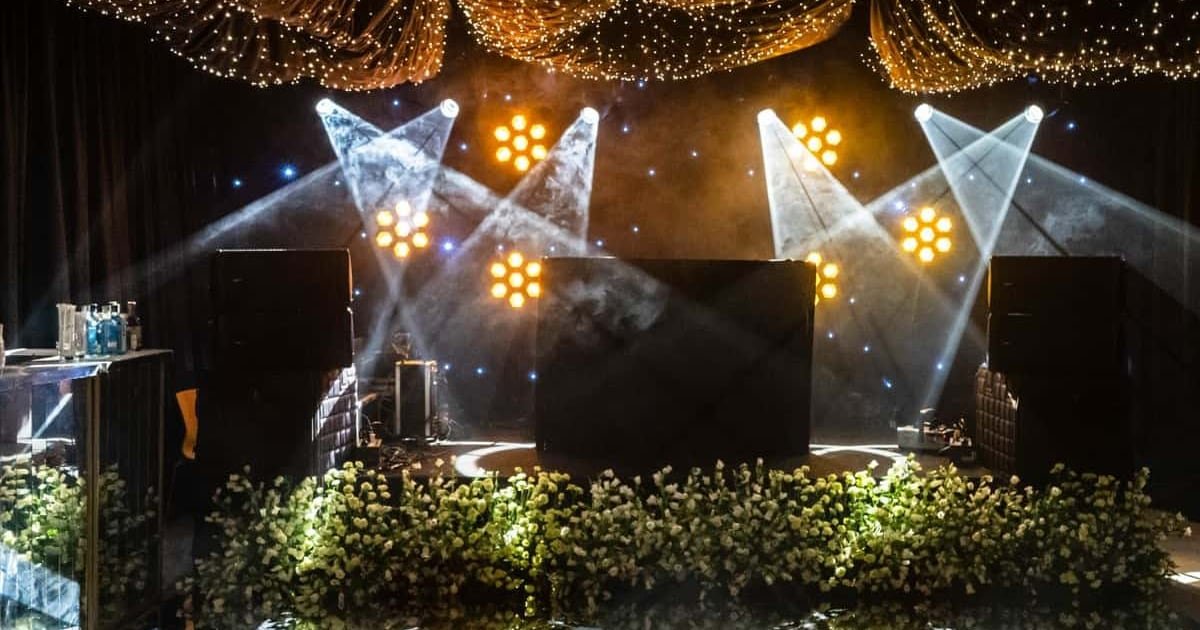
Light is the most generous decoration there is. It costs nothing to look at, it flatters every face, and it can turn plain fabric into gold. Yet it is often the last thing people plan. A well-lit venue does not look lit at all; it simply feels warm, welcoming and a little bit magical.
Warm light is kind light
Colour temperature is the difference between a candle and a clinic. Warm white light, around 2700 Kelvin, sits close to the glow of a traditional lamp and makes skin, gold jewellery and silk look their best. Cooler light feels crisp and modern but can make an evening celebration feel like an office. For weddings and festive evenings, we nearly always begin warm and add contrast with small touches of colour.
From candle glow to daylight
- 2000 KCandle and diya glowIntimate and golden.
- 2700 KWarm whiteOur starting point for weddings and dinners.
- 4000 KNeutral whiteClear light for work areas and kitchens.
- 6500 KCool daylightCrisp, and best kept away from guests.
Build light in layers
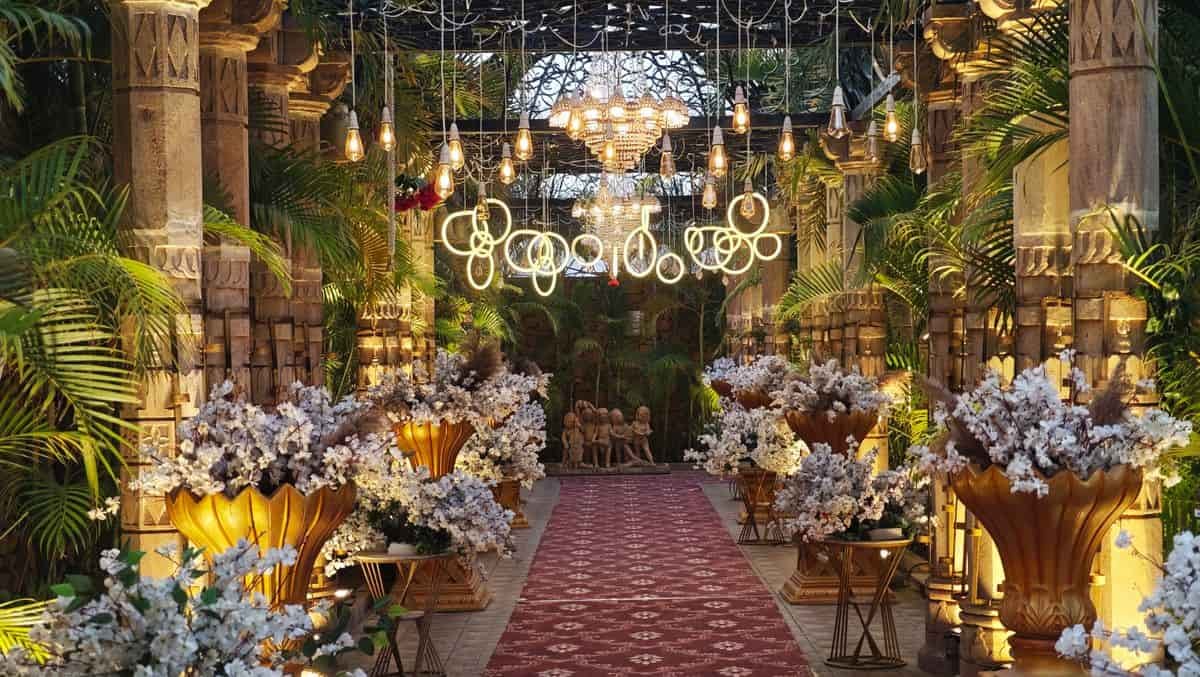
Professional lighting designers think in layers. Ambient light fills the space softly. Accent light picks out what matters: the mandap, the stage, the flowers, the entrance. Feature light, such as chandeliers, fairy-light canopies and lanterns, creates the moments guests photograph. Practical light keeps paths, steps and service areas safe. Each layer can be dimmed on its own, so the mood can shift from welcoming to ceremonial to celebratory over a single evening.
The four layers of light
Ambient
Soft, even light that fills the room.
Accent
Focused light on the mandap, stage and florals.
Feature
Chandeliers, lanterns and fairy-light canopies.
Practical
Safe, steady light for paths, steps and service areas.
Good lighting is invisible. You remember how the evening felt, not how it was lit.
Light the flowers, not the guests’ eyes
Glare is the quiet enemy of a beautiful evening. Bare bulbs at eye level, spotlights aimed across the room and harsh stage lights tire guests quickly. Aim light from above and from the side, keep bright sources shielded or diffused, and let reflective surfaces such as mirrors, crystal and gold fabric do some of the sparkling for you.
Plan the dimmer, not just the bulbs
An evening has chapters: arrival, ceremony, dinner, dancing. Lighting should follow them. We work out a simple sequence with the family in advance, and a trained operator controls it on the day, so that the room can breathe with the event instead of staying frozen in one look from the first guest to the last.
Key takeaways
- Begin with warm white light and add colour as an accent, not as the base.
- Layer ambient, accent, feature and practical light, each on its own control.
- Shield bright sources and plan a lighting sequence that follows the evening.