Every wedding has a few minutes that families remember for decades: the moment the couple sits beneath the mandap and the rituals begin. Everything around that moment is designed to say one thing without words: this place is auspicious, and you are welcome in it.
Start with the meaning, not the mood board
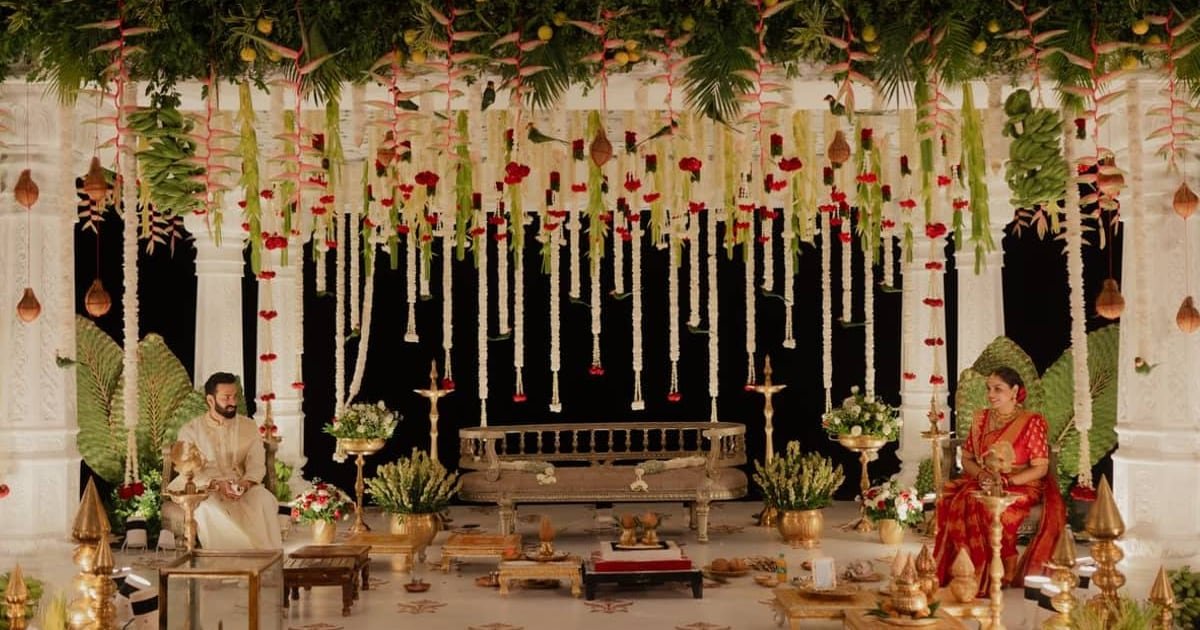
A traditional mandap is built from symbols that families have understood for generations: pillars that frame a sacred space, a canopy that shelters it, a kalash that invites prosperity and a sacred fire at its heart. When these elements are present and placed with care, the design can be as modern or as classic as you like. When they are missing, even the most beautiful stage feels like a stage.
Six symbols worth keeping
Pillars
Four pillars frame the sacred space and are often said to stand for the shared goals of a married life.
Toran
A garland of mango leaves or marigolds that welcomes good fortune at the entrance.
Kalash
A filled pot topped with a coconut and leaves, a classic sign of prosperity and a fresh beginning.
Rangoli
Patterns of colour on the floor that mark the ground as welcoming and sacred.
Diya
A small flame that stands for light, purity and the presence of the divine.
Flowers
Marigold, rose and jasmine bring colour, fragrance and the warmth of a celebration.
Choose flowers and fabric for the venue you have
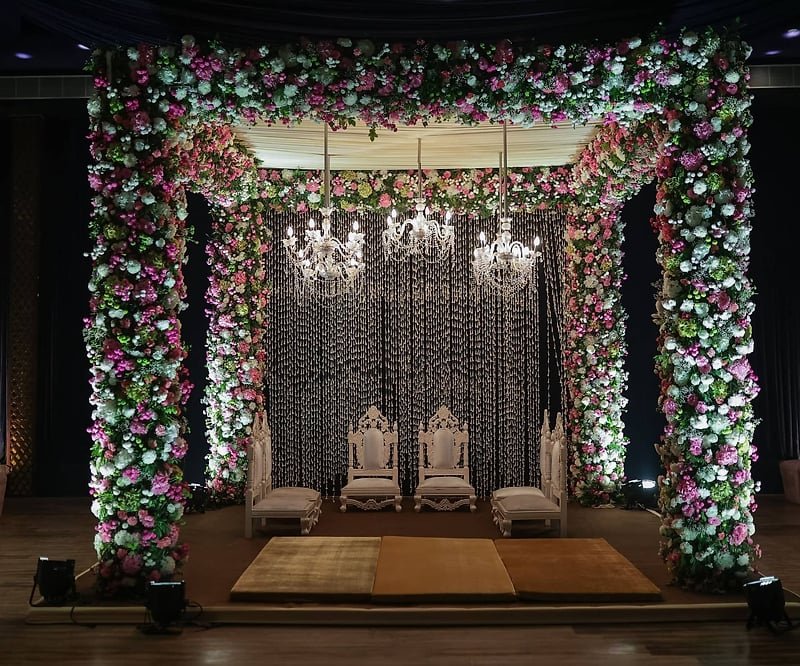
An outdoor lawn invites fresh, abundant flowers and light, flowing drapes. A hall with high ceilings can carry heavier fabric, chandeliers and tall floral pillars. Heat matters too: some blooms wilt quickly under warm lights, so choose flowers for the hours they must last, not only for the photograph. A palette of two or three colours, repeated with intention, almost always looks richer than ten colours competing for attention.
Make it personal without making it loud
Personal touches work best when they are quiet: a family motif woven into the backdrop, a particular flower from the bride’s hometown, a fabric that echoes the outfit, a name in hand-lettered script at the entrance. These small details give guests something to discover and give the families something to recognise as their own. The sacred centre stays untouched, and the design gets its personality from the edges.
Tradition is the foundation. Design is how a family signs its name on it.
Think about the ritual, not just the photograph
A mandap has to work for the priest, the family and the couple for several hours. That means safe space around the fire, seating that lets elders sit comfortably, clear sightlines for relatives, and a layout that lets photographers move without stepping into the ritual. We confirm these needs with the family and the priest before the design is finalised.
Key takeaways
- Keep the sacred elements (pillars, kalash, flame) and let the design flow around them.
- Pick two or three colours, and flowers that can last the hours you need.
- Confirm ritual needs with the family and the priest before the design is finalised.